
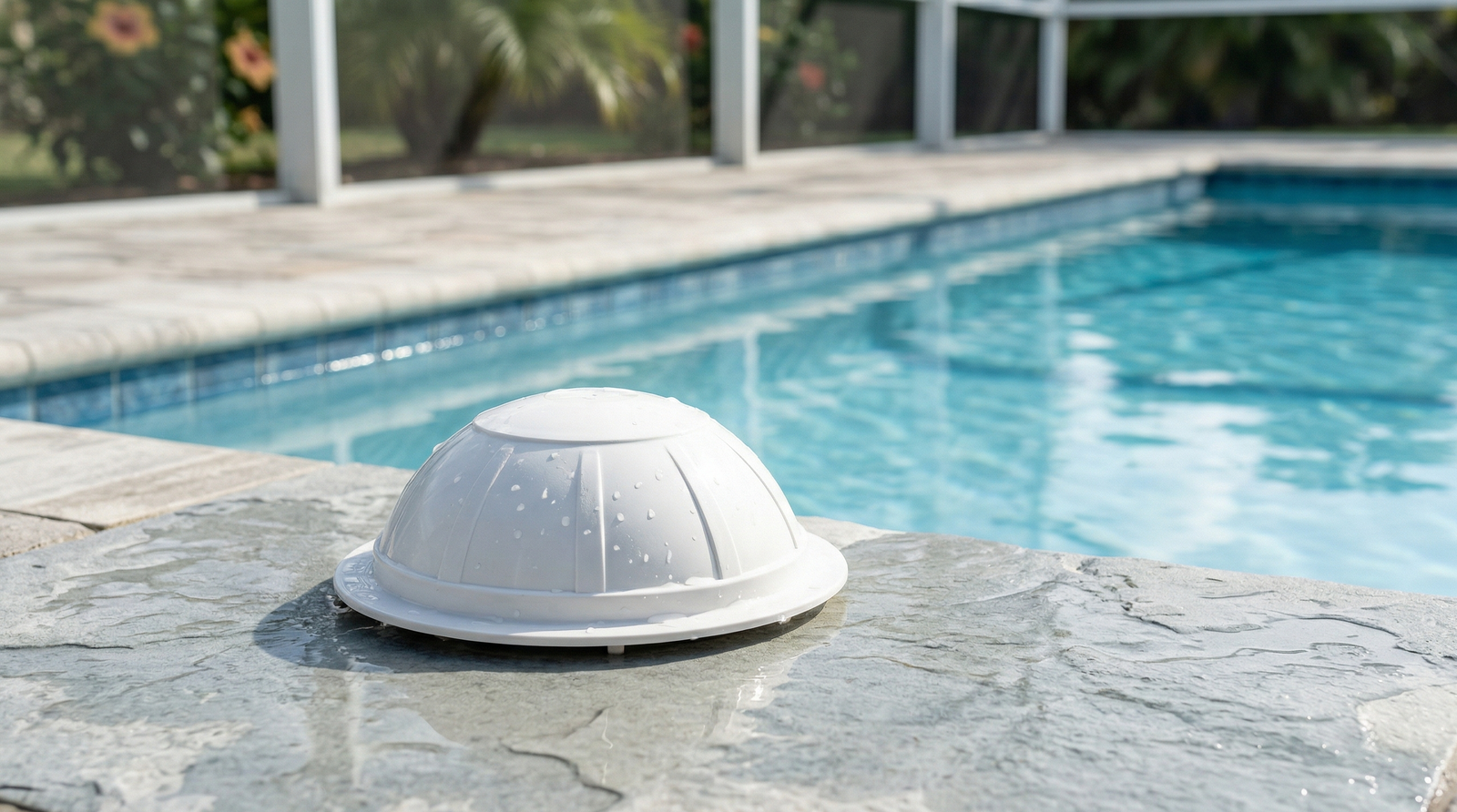
Pool drain safety is not the most exciting topic. But it is one of the most important. Drain-related accidents are among the most dangerous pool incidents, and they are almost entirely preventable with the right equipment and awareness.
Florida has some of the strongest pool safety regulations in the country, and federal law adds another layer on top. If you own a pool or spa in Brevard County, whether residential or commercial, there are specific drain safety requirements you need to know about.
This post covers what the laws actually say, what equipment you need, how to tell if your pool is compliant, and what happens if it is not.
The Virginia Graeme Baker Pool and Spa Safety Act
The most important piece of federal pool safety legislation is the Virginia Graeme Baker Pool and Spa Safety Act, commonly called the VGB Act. It was signed into law in 2007 and took effect in 2008.
The law is named after Virginia Graeme Baker, the 7-year-old granddaughter of former Secretary of State James Baker. She died in 2002 after becoming trapped by the suction of a hot tub drain. Her death was entirely preventable with proper drain covers and anti-entrapment devices.
The VGB Act applies to all public pools and spas, which includes community pools, HOA pools, hotel pools, gym pools, apartment pools, water parks, and any other pool or spa accessible to the public. It does not technically apply to single-family residential pools under federal law, but Florida state law extends similar requirements to residential pools as well.
What the VGB Act Requires
The core requirements of the VGB Act focus on preventing suction entrapment. This is the condition where a person (usually a child) becomes trapped against a pool drain by the suction force of the pump. There are several types of entrapment: hair entrapment, limb entrapment, body entrapment, and mechanical entrapment (where clothing or jewelry gets caught).
The law addresses these risks through two main requirements.
Compliant Drain Covers
Every pool and spa drain must have a drain cover that meets the ASME/ANSI A112.19.8 standard (commonly called the “anti-entrapment standard”). These covers are designed to prevent body parts, hair, and clothing from being pulled into or held against the drain.
Compliant drain covers are rated for a specific flow rate and must be marked with a manufacture date and the applicable standard number. They have a lifespan stamped on them, typically 7 to 10 years from the date of manufacture. Once a cover passes its expiration date, it must be replaced even if it still looks fine.
This is a detail that many pool owners miss. Drain covers expire. A cover that was compliant when installed in 2016 may no longer be compliant in 2026 if its rated lifespan has passed. Check the markings on your drain covers to see the manufacture date and rated life.
Secondary Anti-Entrapment Systems
For pools with a single main drain (rather than dual drains), the VGB Act requires at least one additional anti-entrapment device. Options include a safety vacuum release system (SVRS) that automatically shuts off the pump or breaks the vacuum if a blockage is detected, a suction-limiting vent system that introduces air into the plumbing to break suction, a gravity drainage system that does not rely on pump suction, or an automatic pump shut-off system.
Pools with two or more main drains spaced at least three feet apart are considered inherently safer because the suction is distributed. If one drain is blocked, the other continues to flow, preventing a dangerous vacuum from forming. Dual-drain pools may not need an additional anti-entrapment device, but the drain covers still must be VGB-compliant.
Florida State Pool Safety Requirements
Florida adds its own layer of pool safety regulations on top of the federal VGB Act. These requirements are enforced by the Florida Department of Health (DOH) and apply to both public and residential pools.
The Florida Residential Swimming Pool Safety Act
For residential pools, Florida law (Chapter 515, Florida Statutes) requires at least one of the following safety features:
An enclosure (pool fence or barrier) that meets specific height, gap, and gate requirements. A pool safety cover that meets ASTM F1346 standards. Exit alarms on all doors and windows that open to the pool area. A pool alarm that detects entry into the water.
Most homes in Brevard County with a pool have a screen enclosure that serves as the required barrier. However, a screen enclosure only counts as a compliant barrier if the doors are self-closing and self-latching with latches at least 54 inches above the ground. Many screen enclosure doors in older homes do not meet this height requirement.
Commercial Pool Drain Regulations in Florida
For commercial pools in Florida, the DOH enforces the VGB Act requirements during routine inspections. Inspectors check for compliant drain covers (including expiration dates), proper anti-entrapment devices on single-drain pools, and documentation that the pool’s drainage system meets current standards.
A failed inspection for drain safety violations can result in fines, mandatory pool closure until the violation is corrected, or both. For HOAs, hotels, and apartment complexes in Brevard County, drain compliance is not optional. It is checked every time an inspector visits.
Common Drain Safety Violations in Brevard County
Based on typical inspection findings across Florida, here are the drain-related violations that come up most often.
Expired Drain Covers
This is the most common violation by far. Pool owners install VGB-compliant covers and then forget about them. Seven to ten years later, the covers have expired and are no longer considered compliant, even if they are still physically intact.
The fix is simple: replace the drain covers. Compliant replacement covers typically cost $30 to $100 per drain for residential pools and $50 to $200 per drain for commercial pools. Installation takes 15 to 30 minutes per drain if the existing drain frame is in good condition.
Missing or Damaged Drain Covers
Drain covers can crack, warp, or break over time due to chemical exposure, UV degradation, and physical wear. A missing or damaged drain cover is a serious safety hazard and an immediate violation. The exposed drain creates a direct entrapment risk.
If you notice a cracked or missing drain cover in your pool, stop using the pool immediately and have the cover replaced before anyone swims.
Single Drain Without a Secondary Device
Older pools built before the VGB Act often have a single main drain and no secondary anti-entrapment device. This was standard construction for decades. But under current law, a single drain pool without a secondary safety device is non-compliant.
Retrofitting a single-drain pool with a secondary device typically costs $500 to $1,500 depending on the type of device and the complexity of the installation. A safety vacuum release system (SVRS) is the most common retrofit option.
Non-Compliant Drain Grates
Some older pools have flat drain grates or grates that do not meet the current anti-entrapment standard. These grates may have openings that are too large, may not be rated for the pump’s flow rate, or may not have proper anti-hair-entrapment features.
Replacing non-compliant grates with current-standard covers is usually straightforward and inexpensive.
What Pool Owners Should Check
Whether you own a residential pool or manage a commercial pool in Brevard County, here is a simple checklist for drain safety compliance.
Check your drain covers. Look for the manufacture date and the ASME/ANSI A112.19.8 marking on each cover. If the cover is past its rated lifespan, replace it. If there is no marking, the cover is likely non-compliant and should be replaced.
Count your drains. If your pool has a single main drain, you need a secondary anti-entrapment device. If you are not sure whether your pool has one, ask your pool service technician to check during your next visit.
Inspect cover condition. Look for cracks, warping, discoloration, or loose screws. A cover that is physically damaged should be replaced regardless of its age.
Test your drain covers. Covers should be firmly secured and should not move when you push on them. Loose covers can be pulled off by suction, creating an immediate entrapment hazard.
Check your barrier compliance. For residential pools, make sure your fence, screen enclosure, or other barrier meets Florida requirements. Pay special attention to gate latches, self-closing mechanisms, and latch height.
Review your documentation. For commercial pools, keep records of drain cover installation dates, manufacturer information, and any anti-entrapment devices installed. Inspectors ask for this documentation.
The Cost of Non-Compliance
For residential pool owners, non-compliance with drain safety requirements can affect your homeowner’s insurance coverage and create personal liability exposure if an incident occurs.
For commercial pool operators, the financial consequences are more direct. Florida DOH fines for safety violations can range from $250 to $500 per violation per day. A pool closure order means lost revenue for hotels and disrupted amenities for HOAs and apartment complexes. And if an entrapment incident occurs in a non-compliant pool, the legal liability is severe.
The cost of compliance is minimal by comparison. Replacing drain covers costs a few hundred dollars. Installing a secondary anti-entrapment device costs $500 to $1,500. These are small numbers relative to the risk they eliminate.
Teaching Your Family About Drain Safety
Equipment and regulations are the first line of defense, but education matters too. Every pool-owning family in Brevard County should know a few basic drain safety rules.
Teach children to stay away from pool drains, suction outlets, and skimmers. Even with compliant covers, sitting on or playing near drains is not safe.
Long hair should be tied up before swimming. Hair entrapment is one of the most common suction-related incidents, and it can happen even with compliant drain covers if hair is long enough to reach through the cover openings.
If someone feels stuck or pulled toward a drain, the immediate action is to push away from the drain rather than pull. Pulling can create a tighter seal. Pushing away, or turning to break the seal from the side, is more effective.
Know where the pump shut-off is. Every pool owner and every person who supervises swimmers should know how to turn off the pool pump quickly. In an entrapment situation, shutting off the pump immediately breaks the suction.
Stay Compliant, Stay Safe
Pool drain safety laws exist because children have died from preventable accidents. The regulations are straightforward, the equipment is affordable, and the peace of mind is worth every dollar.
If you are not sure whether your pool is compliant, or if you want a professional to inspect your drains, covers, and safety devices, contact Happy Pool and Spa. Our technicians can evaluate your pool’s drain safety during a regular pool service visit and recommend any needed updates. We serve all of Brevard County, from Indialantic to Palm Bay and every community in between.
Your pool should be a place where your family feels safe. Making sure your drains are up to code is one of the simplest ways to keep it that way.